Silence & sleep
How to sleep during a heatwave: the complete guide
Published on ·4 min read
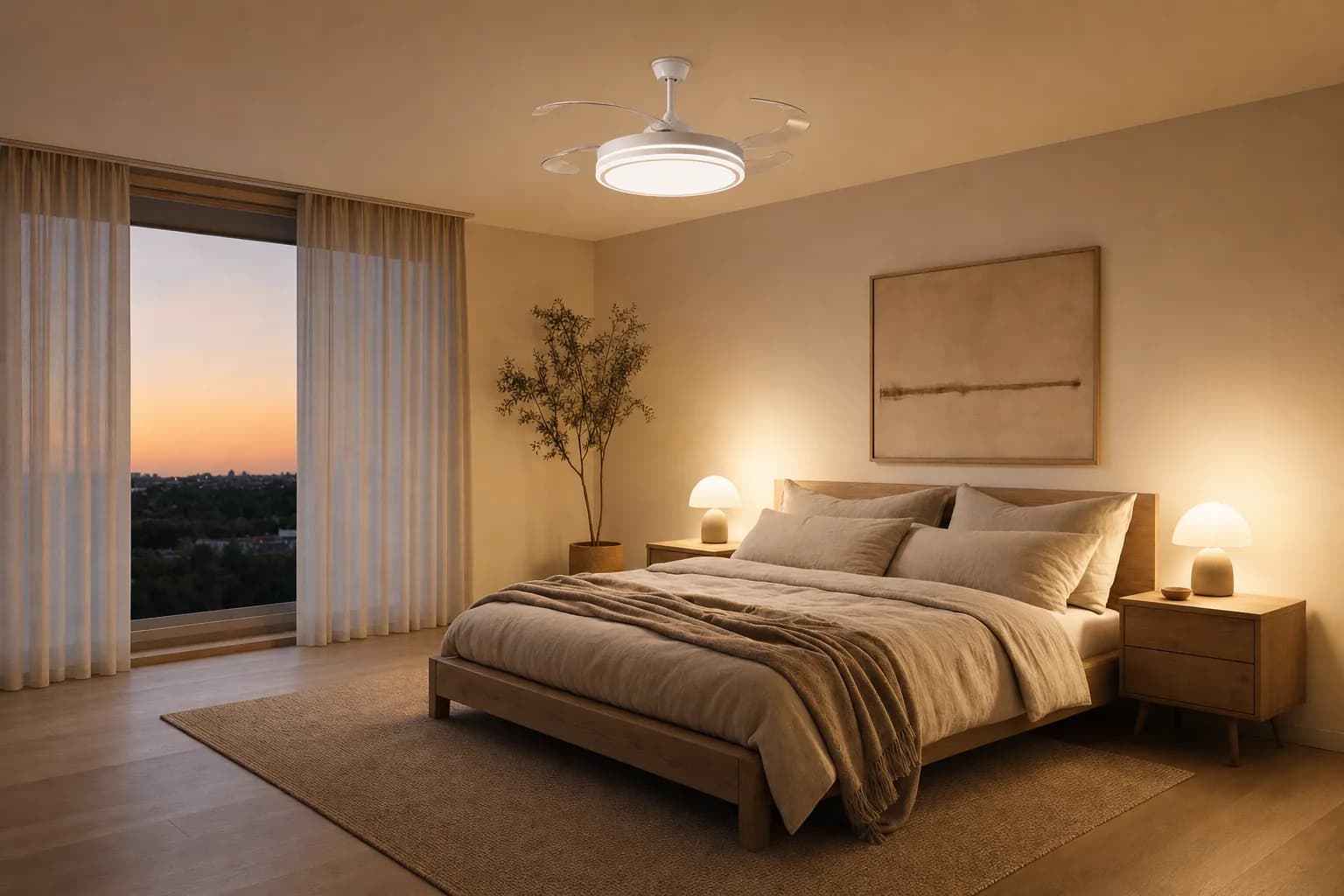
When the thermometer exceeds 35°C by day and 25°C at night, sleep becomes a struggle. The reason is physiological: to fall asleep, the body must lower its core temperature by about 1°C. When the bedroom stays too warm, this nocturnal thermoregulation is impaired, sleep onset is delayed, deep sleep shrinks, and night-time awakenings multiply.
The good news: it is possible to sleep well during a heatwave without air conditioning. The solutions are known, ranked by impact, and most of them are free or nearly so.
The ideal bedroom temperature: 18-22°C and why it matters
Sleep medicine research converges on this: the optimal ambient temperature for sleep is 18 to 22°C. Below 17°C the body spends energy warming itself and REM sleep is shortened. Above 24°C, nocturnal thermoregulation is compromised, core temperature does not drop enough, deep sleep fragments, and micro-arousals increase.
During a heatwave, maintaining this range without AC requires active bedroom management: blocking heat before it enters (shutters closed by day), capturing night-time coolness (cross-ventilation 11 pm to 7 am), and accelerating body-heat dissipation through air circulation.
- ·18-22°C: optimal range, fast sleep onset, complete deep sleep
- ·23-26°C: reduced comfort, frequent micro-arousals, light sleep
- ·27°C and above: difficult sleep onset, night sweats, prolonged awakenings
Managing the bedroom by day: stopping heat at the source
A bedroom that has not heated up during the day does not need cooling in the evening. Glazing in full sun can let through up to 500 W per square metre. Shutters or thick curtains closed all day on the sunny side: this is the most impactful single gesture of the summer, and it is free.
From 11 pm to 7 am, outdoor air is often 8 to 12°C cooler than the bedroom. Two opposite open windows create a through-draught that can drop temperature by 4 to 6°C in an hour. Then everything closes again: the coolness stays trapped in the thermal mass of walls and floors.
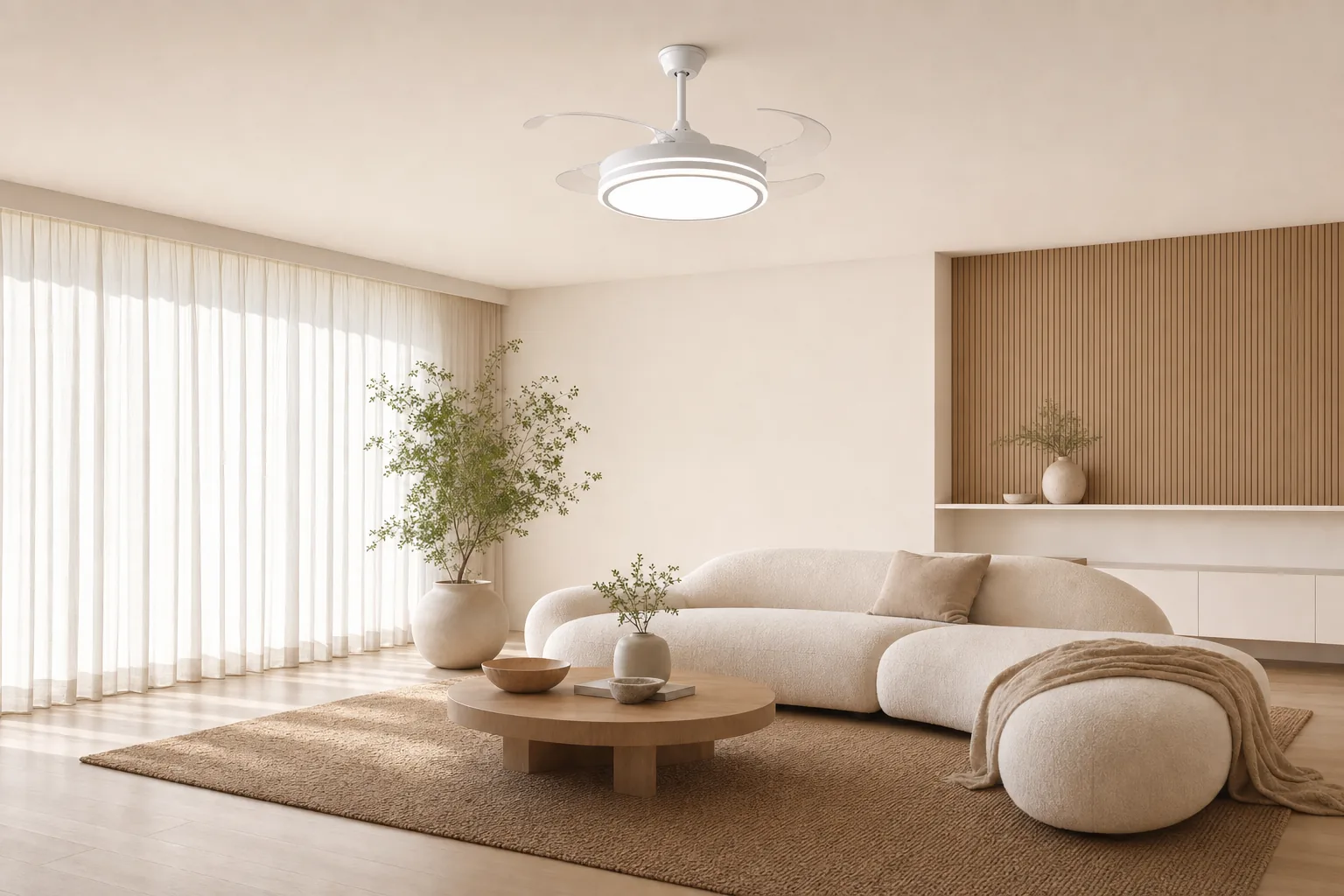
The Boréal 107
Retractable blades · Ø 107 cm · LED ceiling light & silent fan
- ✓Retractable blades: invisible when off, nobody guesses it's a fan
- ✓Sleep with windows closed, 30 dB, quieter than a whisper
- ✓Integrated LED 2700K → 6000K, dimmable: replaces your ceiling light
Bedding and nightwear: the materials that make the difference
Bedding is in direct contact with the body and determines heat and moisture dissipation. In summer the criteria are the inverse of winter: thermal conductivity (evacuates heat) and breathability (allows sweat evaporation), not insulation.
Best materials for sleeping in a heatwave, in order: washed linen (excellent conductivity, very breathable, stays cool against the skin), percale cotton (tight weave, cool to the touch, absorbs moisture well), bamboo viscose (very breathable, thermoregulating). Avoid absolutely: polyester and synthetic blends, which trap heat and prevent evaporation.
- ·Washed linen: best thermal conductivity, stays cool to the touch, optimal choice
- ·Percale cotton (>200 threads): cool, absorbent, durable, excellent value
- ·Bamboo viscose: very breathable, thermoregulating, good alternative
- ·Polyester / microfibre: eliminate in summer, traps heat and perspiration
Air circulation: the technique that changes everything
Moving air is perceived 3 to 4°C cooler than still air at the same temperature, the wind-chill effect. The goal is not to lower the room temperature but the temperature you feel on your skin.
A ceiling fan is the optimal device for this: it circulates air across the entire room without directing a draught at the sleeper, at noise levels that can be maintained all night. On night speed, a DC motor model drops to 30 dB, the level of a whisper, in line with the WHO bedroom recommendation. A floor fan creates too localised an airflow and blows too hard; AC cools effectively but generates 55 dB continuously, fragmenting sleep.
- ·Ceiling fan on night speed: 30 dB, wide circulation, no direct draught, optimal
- ·Floor fan: 40-50 dB, localised airflow, acceptable stopgap
- ·Air conditioning: effective cooling but 55 dB continuously, fragments light sleep
Sleeping through a heatwave is possible without air conditioning, provided the right levers are applied in the right order: block heat by day, ventilate at night, choose the right bedding, stay hydrated and keep air moving. That last point, silent air circulation, is the one that most changes the perceived thermal sensation, at near-zero electricity cost. That is precisely the work our 30 dB ceiling fans were designed for.
Frequently asked questions
What is the ideal bedroom temperature for sleeping during a heatwave?+
Sleep medicine research places the optimal range at 18 to 22°C. Above 24°C, nocturnal thermoregulation is compromised and micro-arousals increase significantly. The goal is to reach this range through shutter management, night ventilation and air circulation.
Is it better to sleep with or without a fan during a heatwave?+
With a silent ceiling fan, without hesitation. Moving air is perceived 3 to 4°C cooler than still air, the difference between an uncomfortable 26°C room and an acceptable 22-23°C sensation. The wide circulation of a ceiling fan avoids the direct draught of floor fans.
Is air conditioning really bad for sleep?+
AC is thermally effective but generates 55 dB in operation, 25 dB above the WHO bedroom recommendation. For light sleepers, compressor noise fragments deep-sleep cycles, partially cancelling the thermal benefit. An alternative: ceiling fan (30 dB) + rigorous shutter management.
The SEY Maison Circle
Every month, an exceptional piece. Never reissued.
The Drops principle: one high-end furniture piece per month, in a numbered edition. Once it's gone, it never comes back. Circle members are notified 48 h early, access each drop 24 h before everyone else, and receive our guides before publication.
Discover the Drops →