Silence & sleep
Noise and sleep: what nighttime sound really does to your body
Published on ·3 min read
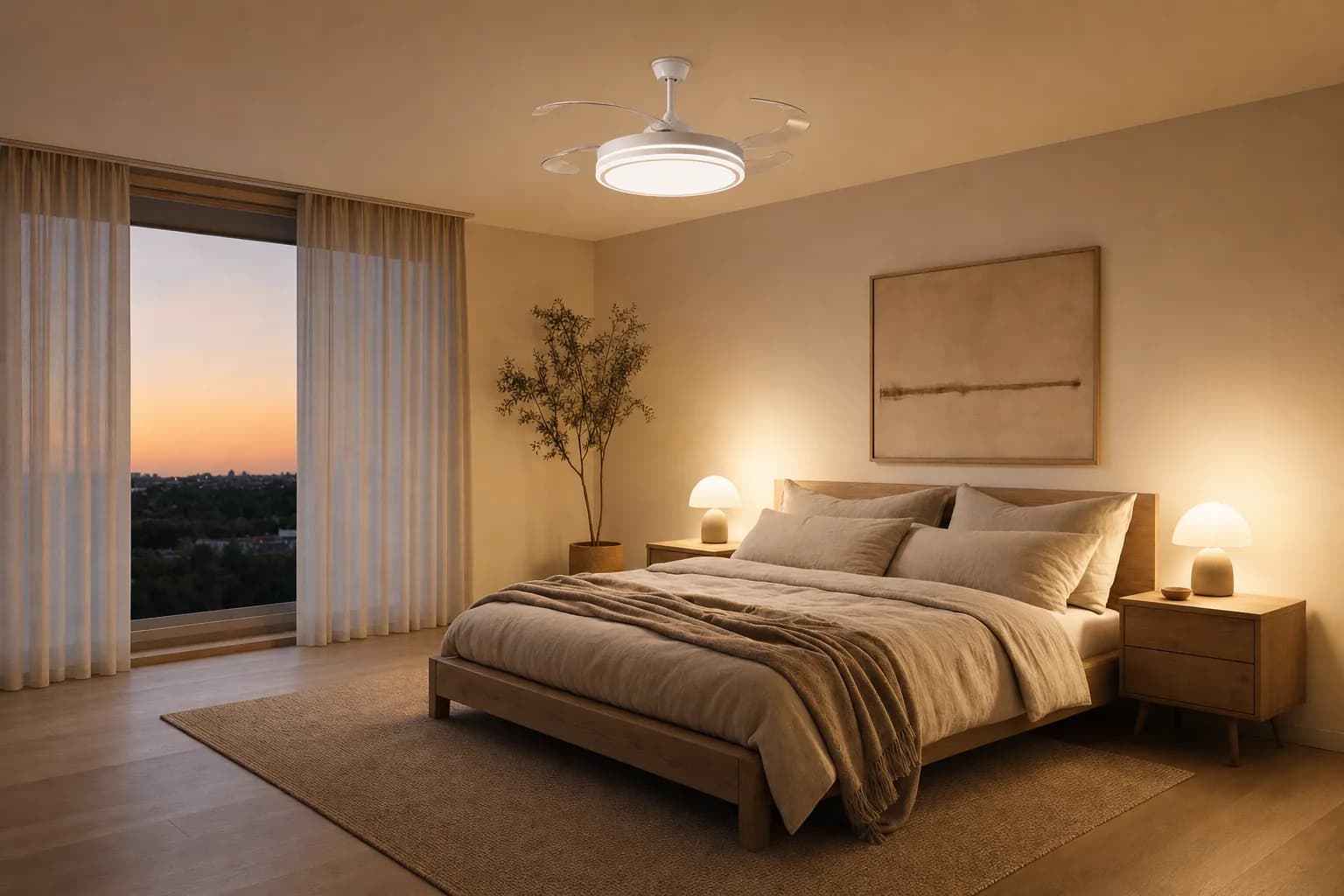
You sleep eight hours and wake up exhausted. The most overlooked explanation is often the simplest: your bedroom is too loud. Not loud enough to prevent falling asleep, but loud enough to fragment your sleep into dozens of micro-arousals you will never remember, yet whose effects your body carries all day.
Micro-arousals: the invisible threat
A micro-arousal is a sleep interruption lasting 3 to 15 seconds, too brief to remember, but long enough to eject the brain from deep sleep. At 45 dB, the level of a quiet street or a cheap fan, the sleeping brain produces measurable EEG responses: sleep spindles fragment and slow-wave sleep is cut short.
Polysomnographic studies show that 40 dB is enough to trigger micro-arousals in sensitive sleepers. The WHO therefore recommends a threshold of 30 dB at night, equivalent to a countryside bedroom in calm weather.
- ·30 dB: WHO-recommended bedroom level, whisper, silent ceiling fan
- ·40 dB: quiet library, micro-arousal threshold in sensitive sleepers
- ·55 dB: domestic air conditioning, documented sleep fragmentation
Cortisol: the stress you never chose
The autonomic nervous system never fully sleeps. Even in deep sleep, the ear routes sound signals to the amygdala, which can trigger a stress response without involving consciousness, releasing cortisol at the heart of the night.
Elevated nocturnal cortisol impairs memory consolidation, disrupts insulin regulation, and maintains background vigilance that prevents slow-wave sleep from reaching its full duration. Studies of people living near airports show systematically higher nocturnal cortisol levels than those in quiet areas, even for sound levels subjects describe as 'not very bothersome'.
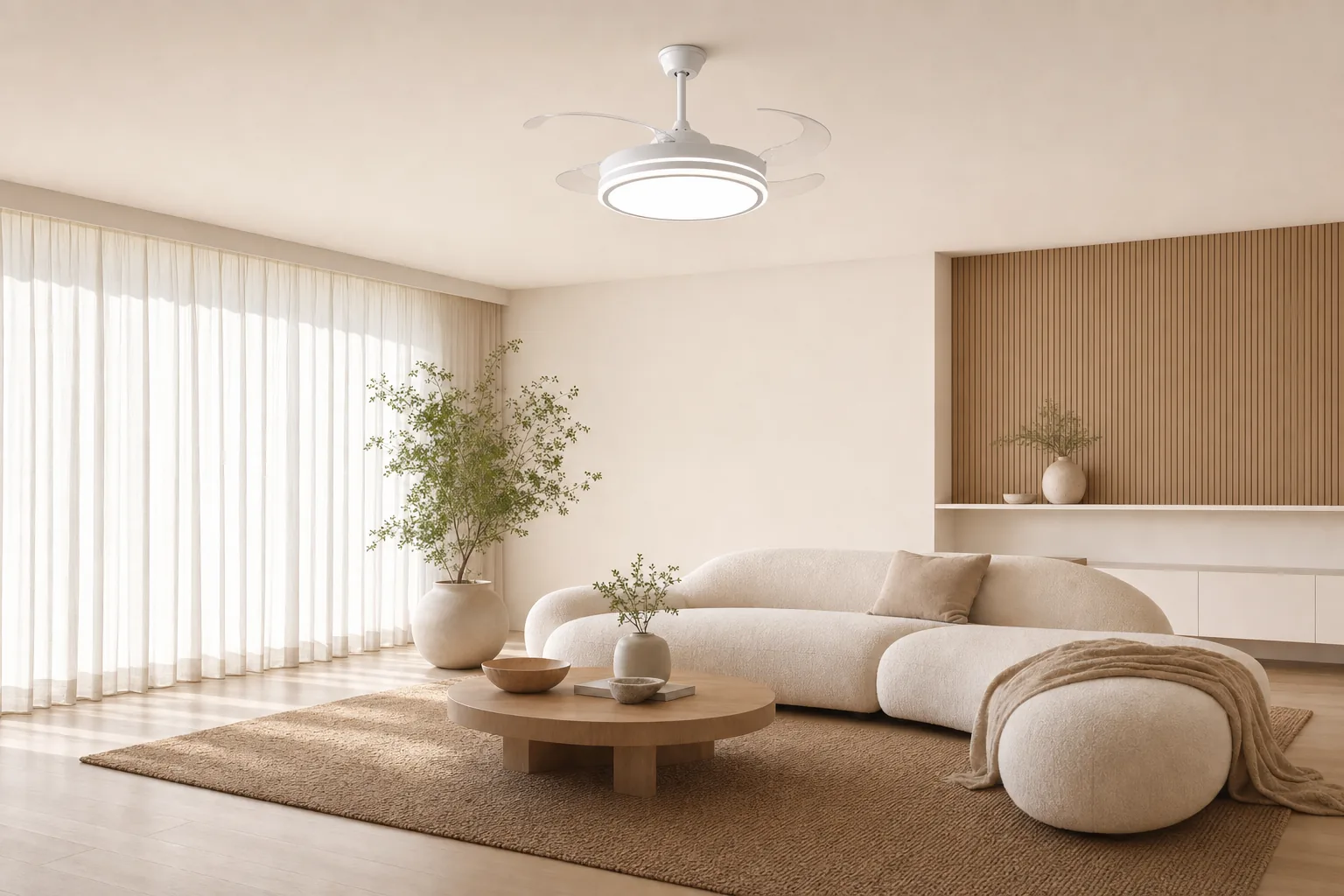
The Boréal 107
Retractable blades · Ø 107 cm · LED ceiling light & silent fan
- ✓Retractable blades: invisible when off, nobody guesses it's a fan
- ✓Sleep with windows closed, 30 dB, quieter than a whisper
- ✓Integrated LED 2700K → 6000K, dimmable: replaces your ceiling light
Cardiovascular risk: what the WHO established
The WHO Europe (2018) concluded that chronic exposure to nighttime noise above 40 dB increases the risk of ischaemic heart disease. At 55 dB, the level of domestic AC or a city street at night, that risk is classified as 'high'.
The mechanism is direct: repeated nocturnal cortisol and adrenaline spikes raise blood pressure night after night. Over years, this episodic hypertension leaves marks on arterial walls. It is not a single loud concert that damages arteries, it is 55 dB every night for ten years.
How to protect your bedroom: practical steps
Most sources of nighttime noise are a matter of management rather than construction. Priority order: (1) remove or replace noisy appliances, window AC at 55 dB is usually the first offender; (2) treat acoustic bridges, a poorly sealed door transmits more sound than the wall itself; (3) add soft mass, heavy curtains halve bass-frequency transmission.
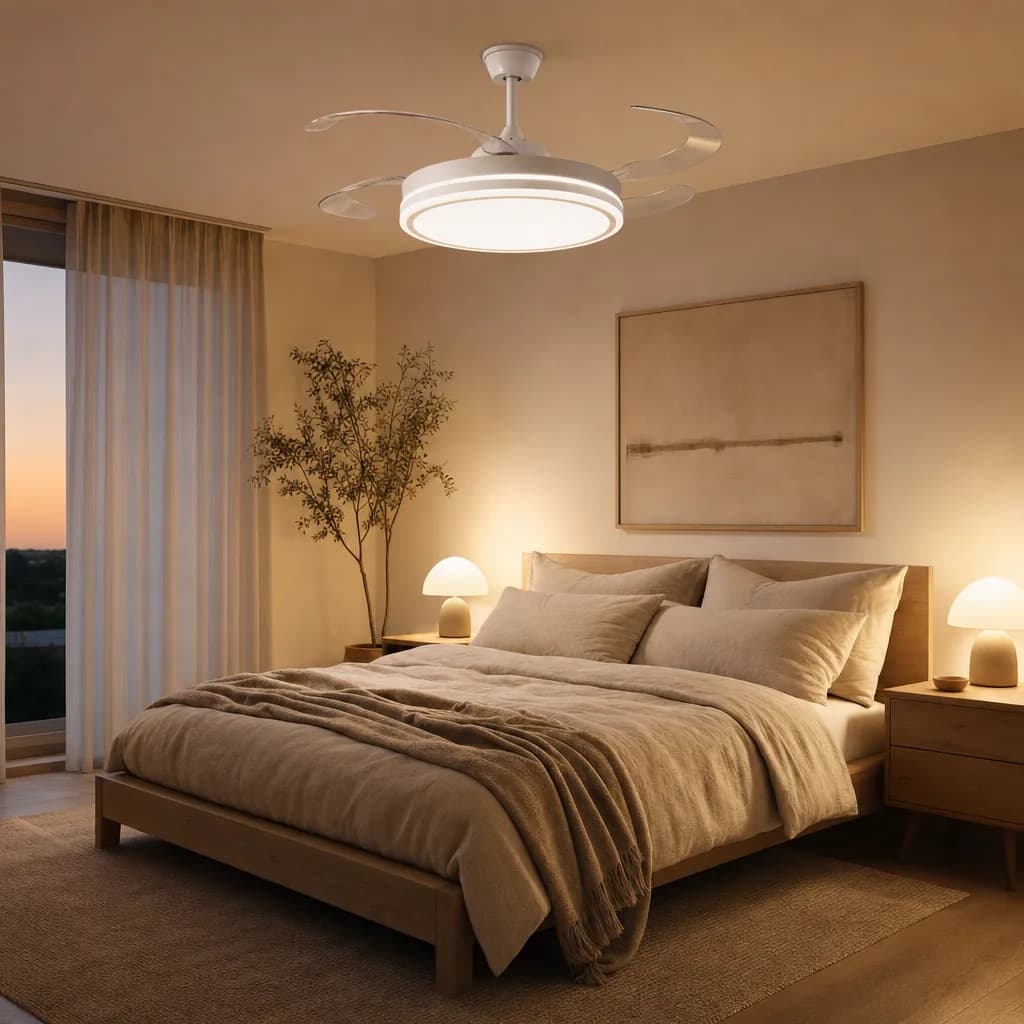
For uncontrollable external noise, the most pragmatic strategy is masking with a continuous low-level sound. A DC ceiling fan on night speed produces gentle white noise around 30 dB: enough to cover unpredictable sound spikes, not enough to disturb sleep.
Nighttime noise is not a minor inconvenience, it is a documented health factor with a clear WHO limit of 30 dB. Reducing bedroom noise is an investment in recovery, memory and long-term cardiac health. That is the logic behind our ceiling fans: effective air circulation at just 30 dB, so the night stays what it should be, silent.
Frequently asked questions
What noise level does the WHO recommend for sleeping?+
The WHO recommends below 30 dB at night in the bedroom. Above 40 dB, micro-arousals are measurable in sensitive sleepers; above 55 dB, cardiovascular risk is classified as high.
Are micro-arousals from noise dangerous if you don't remember them?+
Yes. Micro-arousals fragment deep sleep cycles without reaching consciousness. Their accumulation produces the same effects as a short night: fatigue, cognitive decline, irritability, and over time, metabolic and cardiovascular consequences.
Does air conditioning help sleep despite its noise?+
AC cools the room but generates 55 dB continuously, 25 dB above the WHO recommendation. For many sleepers, the thermal benefit is cancelled out by sleep fragmentation caused by compressor noise.
The SEY Maison Circle
Every month, an exceptional piece. Never reissued.
The Drops principle: one high-end furniture piece per month, in a numbered edition. Once it's gone, it never comes back. Circle members are notified 48 h early, access each drop 24 h before everyone else, and receive our guides before publication.
Discover the Drops →