Interior design
Japandi style: the complete guide to a serene, timeless interior
Published on ·3 min read
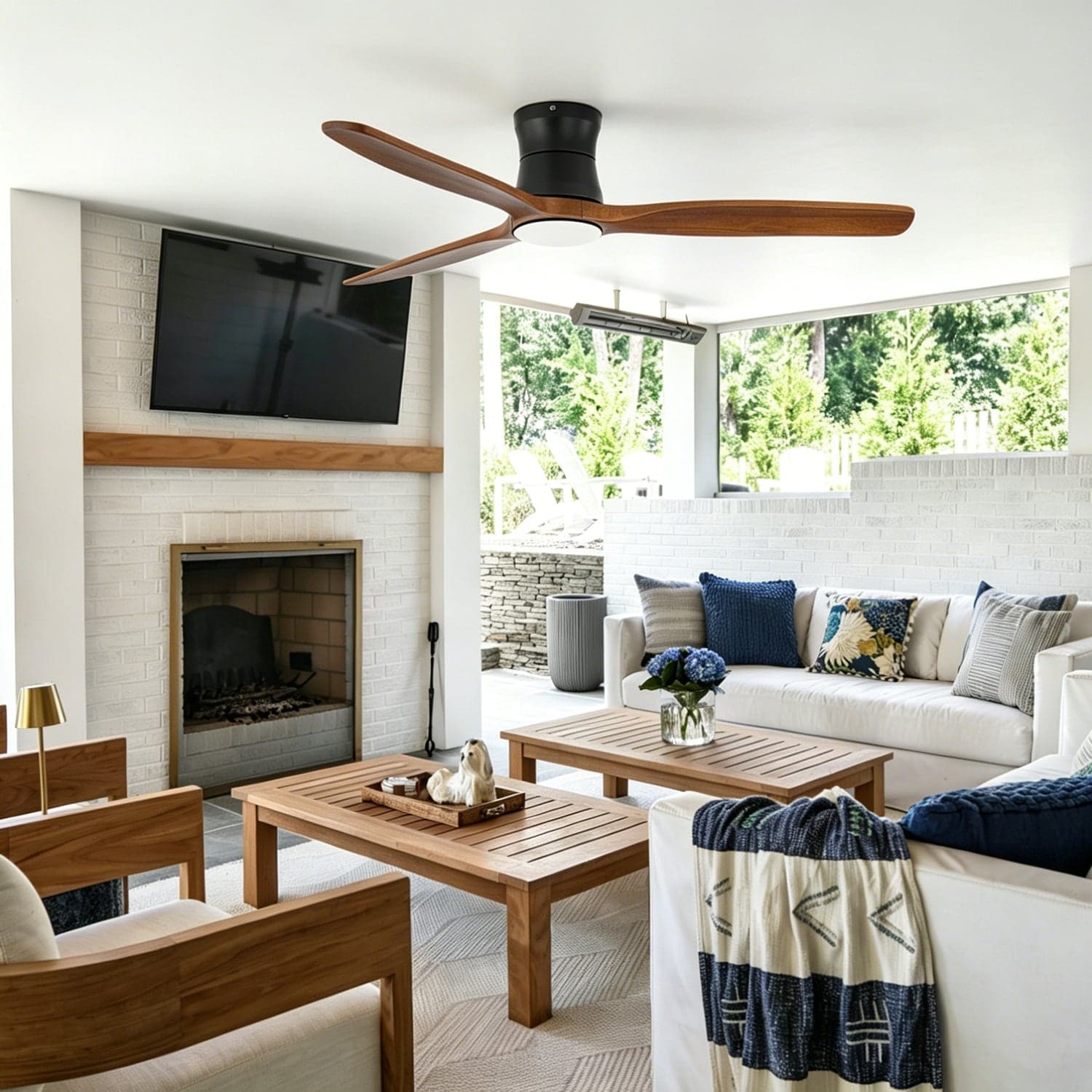
Japandi is not a style invented by social media, it is the natural meeting of two design philosophies that had long been seeking each other. Japanese aesthetics (wabi-sabi, ma, centuries of craft with natural materials) meets Scandinavian design (hygge, clean functionality, luminous clarity). Both converge on essentials: intentional simplicity, honest materials, and the refusal of the superfluous.
What makes Japandi particularly effective in decoration is its pragmatism. It does not demand a full room overhaul, it calls for editing, selecting, choosing pieces with quiet but real presence.
Founding principles: wabi-sabi meets hygge
Wabi-sabi values imperfection, natural wear and the patina of time. A slightly asymmetric ceramic, a wood tray with visible knots, brass that slowly deepens to copper, these are qualities, not flaws. Hygge is more sensory: the warmth of a room where you feel safe. Candlelight, soft textiles, natural wood, dim light. In Japandi, the two complete each other: wabi-sabi provides the soul, hygge provides the comfort.
The Japandi palette: neutrals, earth tones, sage green
The Japandi palette is one of the most restrictive, and one of the easiest to live with long term. Warm neutrals (cream, greige, linen beige, off-white), earthy tones (pale ochre, discreet terracotta, warm brown), natural greens (sage, moss, khaki) and sober blacks (charcoal, ink). Pure white, cold grey and primary colours are excluded.
Chromatic accents come from materials rather than vivid colours: walnut grain, undyed natural linen, the red-brown of a clay vase. Material provides colour, not paint, a principle that guarantees temporal coherence independent of trends.
- ·Warm neutrals: ivory cream, linen greige, warm beige, on large surfaces
- ·Earthy organics: ochre, clay, walnut, bamboo, on furniture and objects
- ·Nature accent: sage green, ink, patinated brass, on light fixtures and details
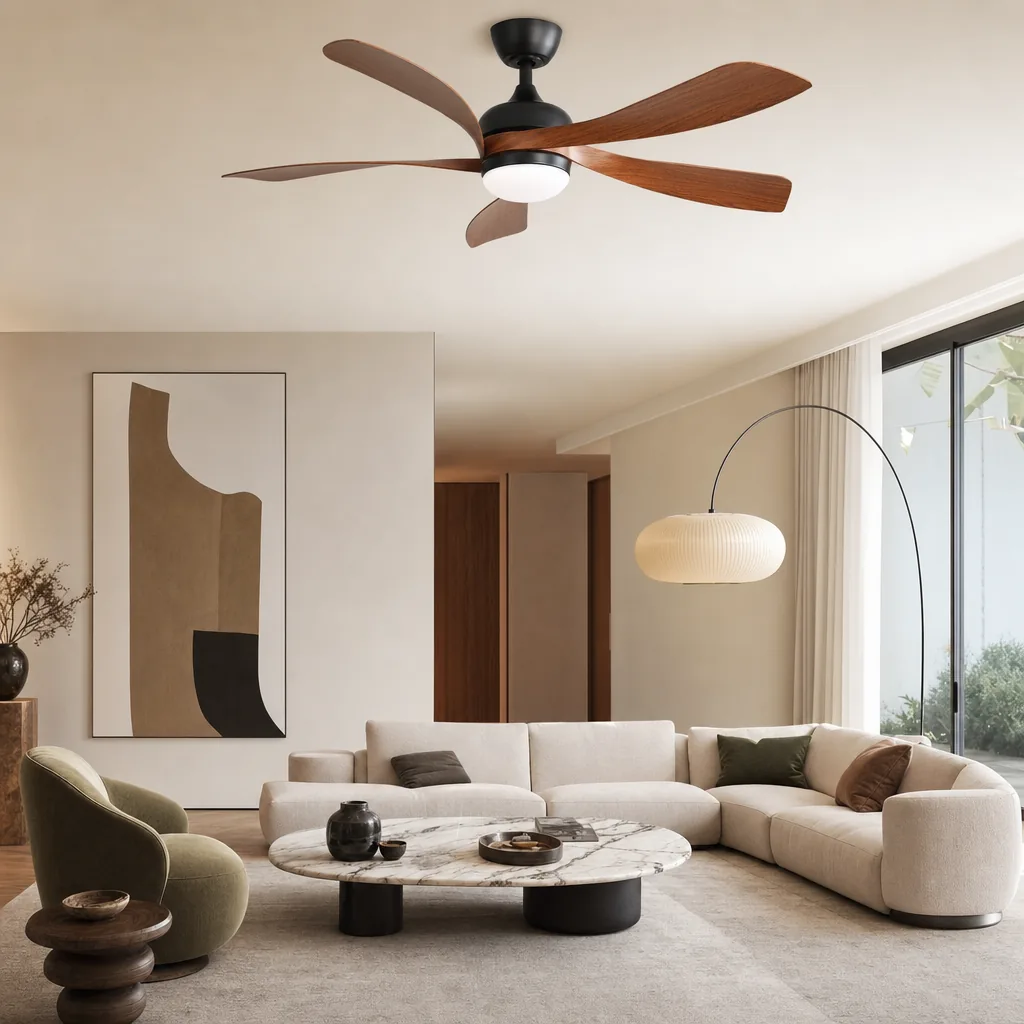
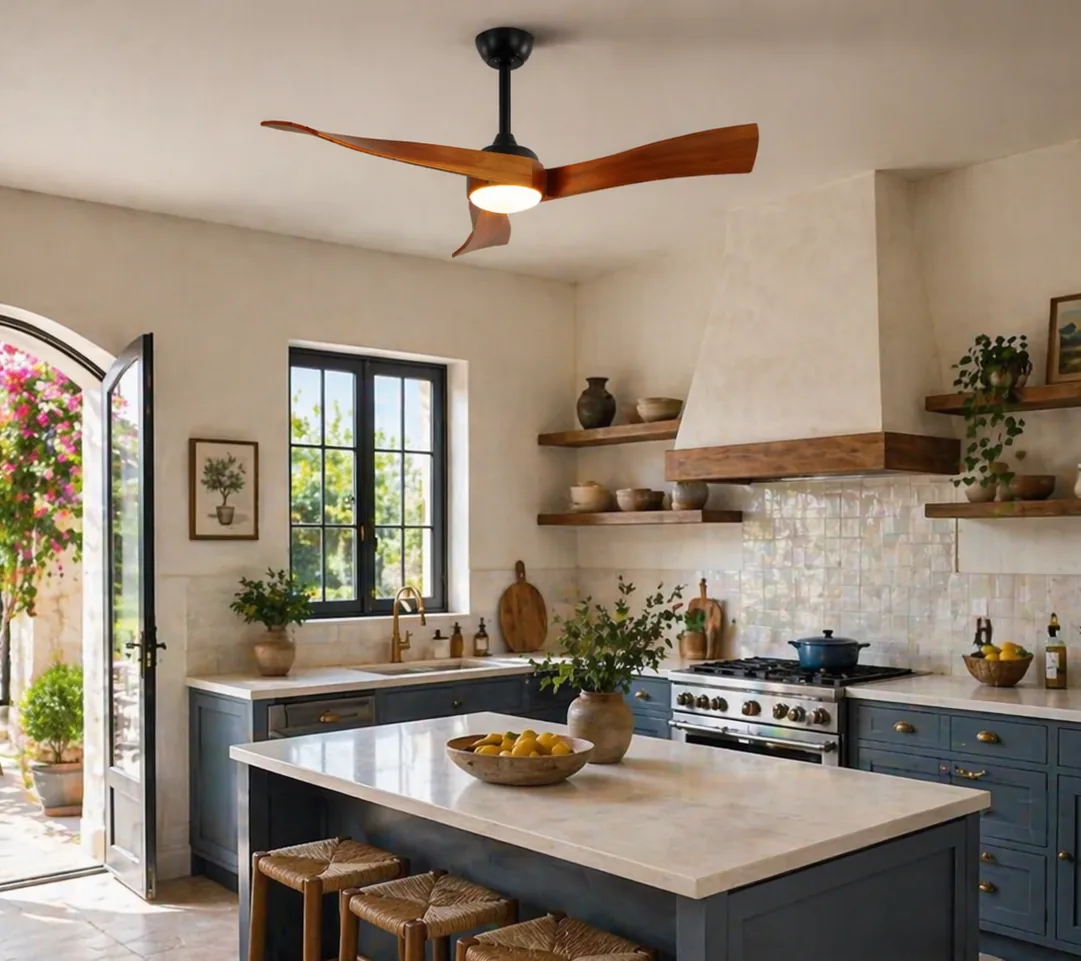
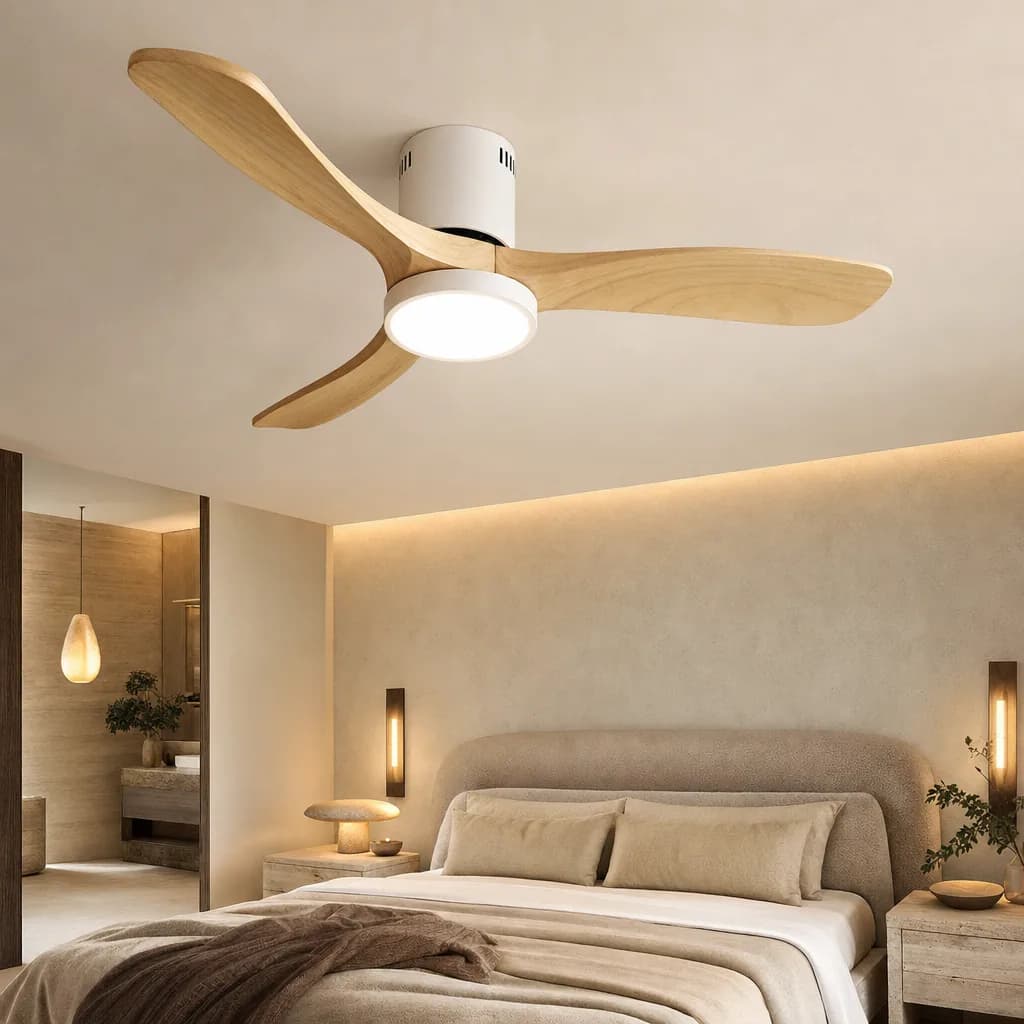
The Fjord 132
Solid wood · Ø 132 cm · Three Scandinavian blades
- ✓Oiled solid-wood blades, every unit is unique
- ✓Three-blade Scandinavian design: sculptural, never heavy
- ✓Ultra-silent DC motor, slow large-volume airflow
€339€429
Key materials: wood, ceramic, linen, brass
Wood is Japandi's primary material, not just any wood: light species (ash, pale oak, bamboo, beech) for Nordic inspiration; dark, rich species (walnut, teak) for Japanese. Both can cohabit if finishes converge: matt, oiled, no gloss varnish.
Brushed brass occupies a special place in Japandi: not the polished brass of classical interiors, but lightly oxidised, light-absorbing. On a tap, handle, lamp base or the body of a ceiling fan like the Fjord 132, it provides a warm, artisanal note that bridges both aesthetics.
Furniture and key pieces: the minimum that suffices
Japandi furniture is low (Japanese influence), sober (Scandinavian), and multifunctional (both). Low-frame bed, armless or discreet-arm sofa, floor-level or slightly raised coffee table, closed or mid-height storage. The rule: every piece of furniture has a precise function; nothing is there to fill space.
Handcrafted ceramic pieces, bowls, vases, tiles, are accents that add character without visual noise. One clay vase on a pared-back shelf speaks more than ten trinkets combined.
Japandi is the interior style that resists time because it does not follow trends, it follows materials. A Japandi room gains beauty as it ages: patinated walnut, washed linen, lightly oxidising brass. Our walnut and brushed-brass ceiling fans follow this logic: they gain value over the years, not in spite of them.
Frequently asked questions
Is Japandi compatible with a home with children?+
Yes, it is one of its advantages. Natural materials (wood, linen, ceramic) are durable and easy to maintain. The editing principle means keeping only what is useful or beautiful, which simplifies family life.
What is the difference between Japandi and minimalism?+
Minimalism aims for absolute emptiness; Japandi aims for the right amount. A Japandi interior can have objects, books, plants, each chosen with intention. Warmth and sensoriality (textures, living materials) are present where minimalism would erase them.
Can Japandi be mixed with an industrial style?+
With moderation. Raw metal and concrete can cohabit with wood and linen if finishes stay matt and colours remain within the Japandi palette. Matt black metal or light grey polished concrete work better than brushed stainless steel or dark grey raw concrete.
The SEY Maison Circle
Every month, an exceptional piece. Never reissued.
The Drops principle: one high-end furniture piece per month, in a numbered edition. Once it's gone, it never comes back. Circle members are notified 48 h early, access each drop 24 h before everyone else, and receive our guides before publication.
Discover the Drops →