Interior design
Noble materials in interior design: how to identify and integrate wood, brass, travertine and linen
Published on ·4 min read
There is an immediate, tactile difference between an interior that uses genuine noble materials and one that imitates them. Solid wood has a grain, a temperature, a sound under the fingers that imitation cannot reproduce. Brushed brass ages, it patinates, deepens, develops character. These properties are not merely aesthetic: they are alive.
Recognising noble materials, understanding how they age, and knowing how to combine them is the core competency of the premium interior. This guide covers four of the most versatile and sought-after materials: solid wood, brass, travertine, and linen.
Solid wood: species, finishes and quality indicators
Solid wood is distinguished from veneer or laminate by eye and touch: the edge cut reveals continuous grain across the full thickness. Under a table or shelf, look for this cut, continuous grain means solid; layers mean veneer. For exposed pieces, oak and walnut are the reference species in Europe: oak for robustness and golden clarity, walnut for its chocolate depth and violet undertones.
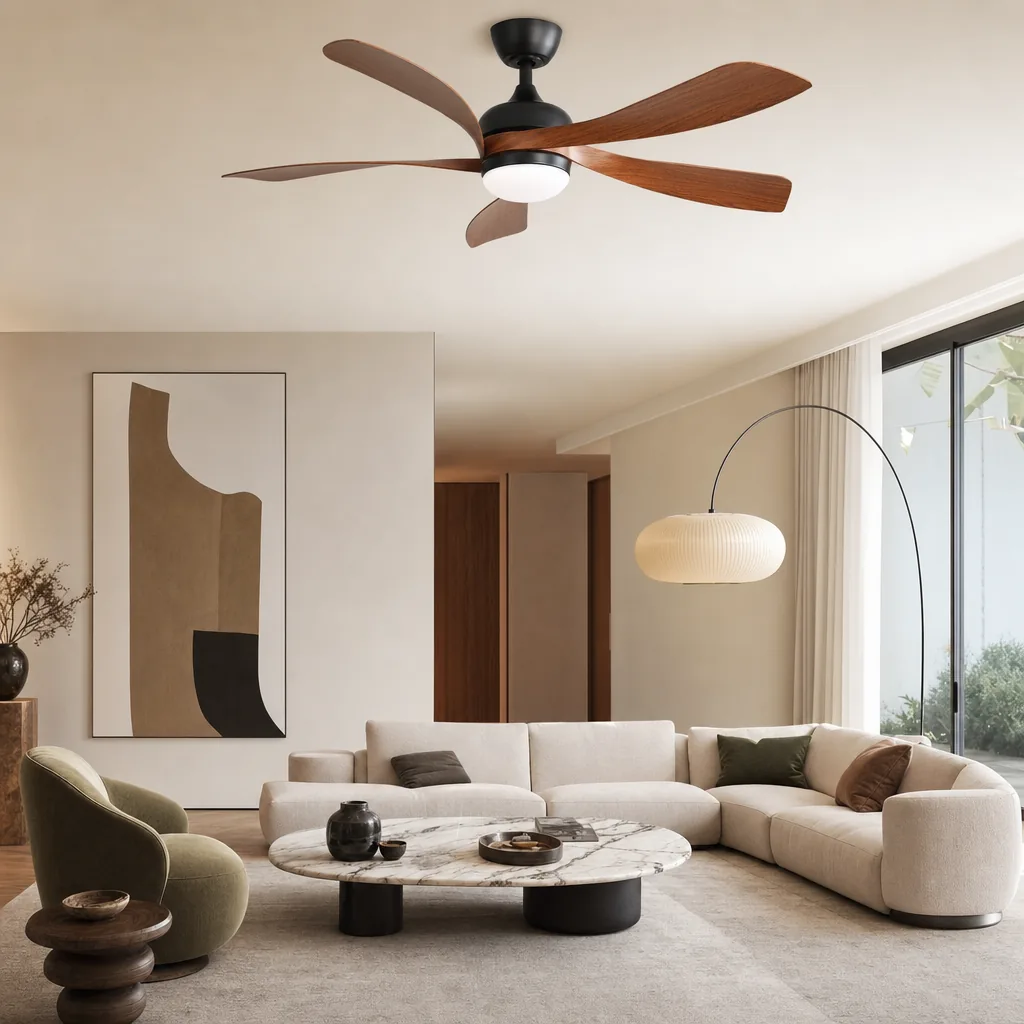
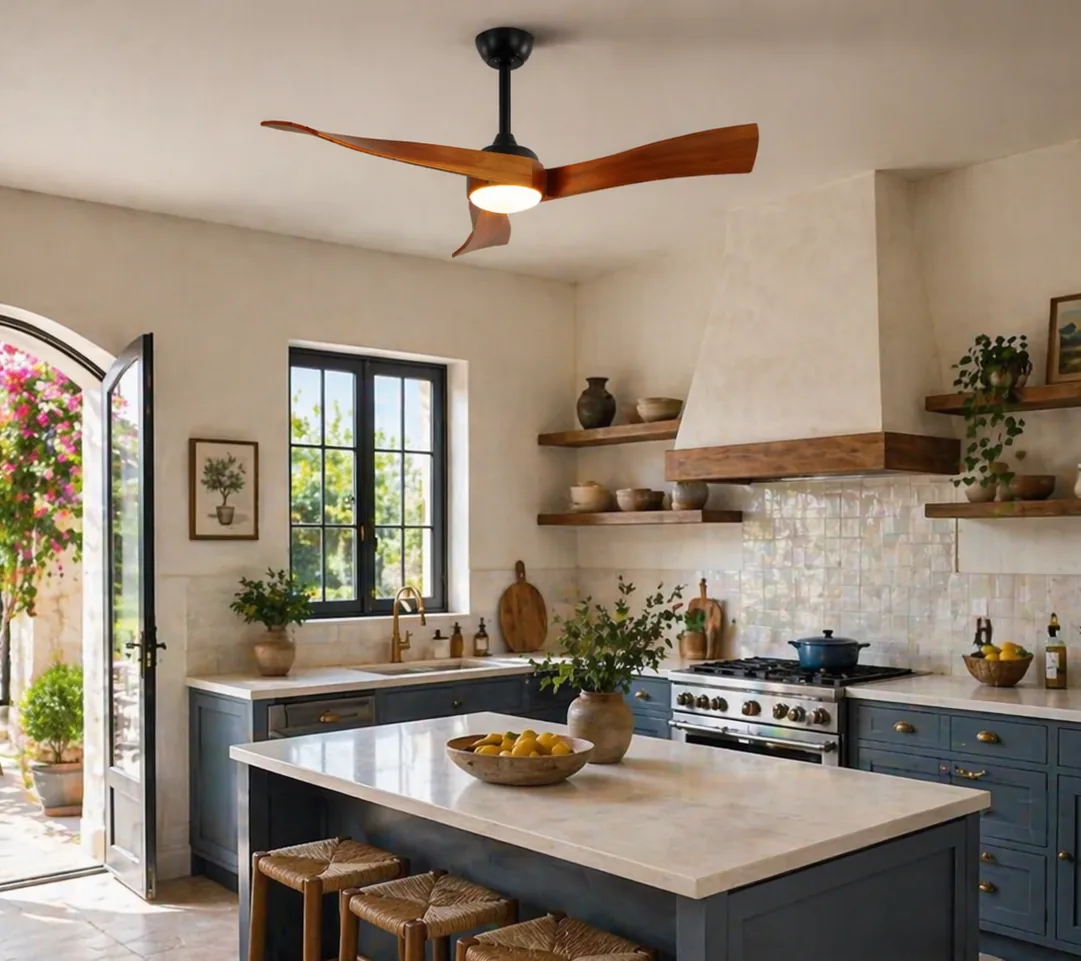
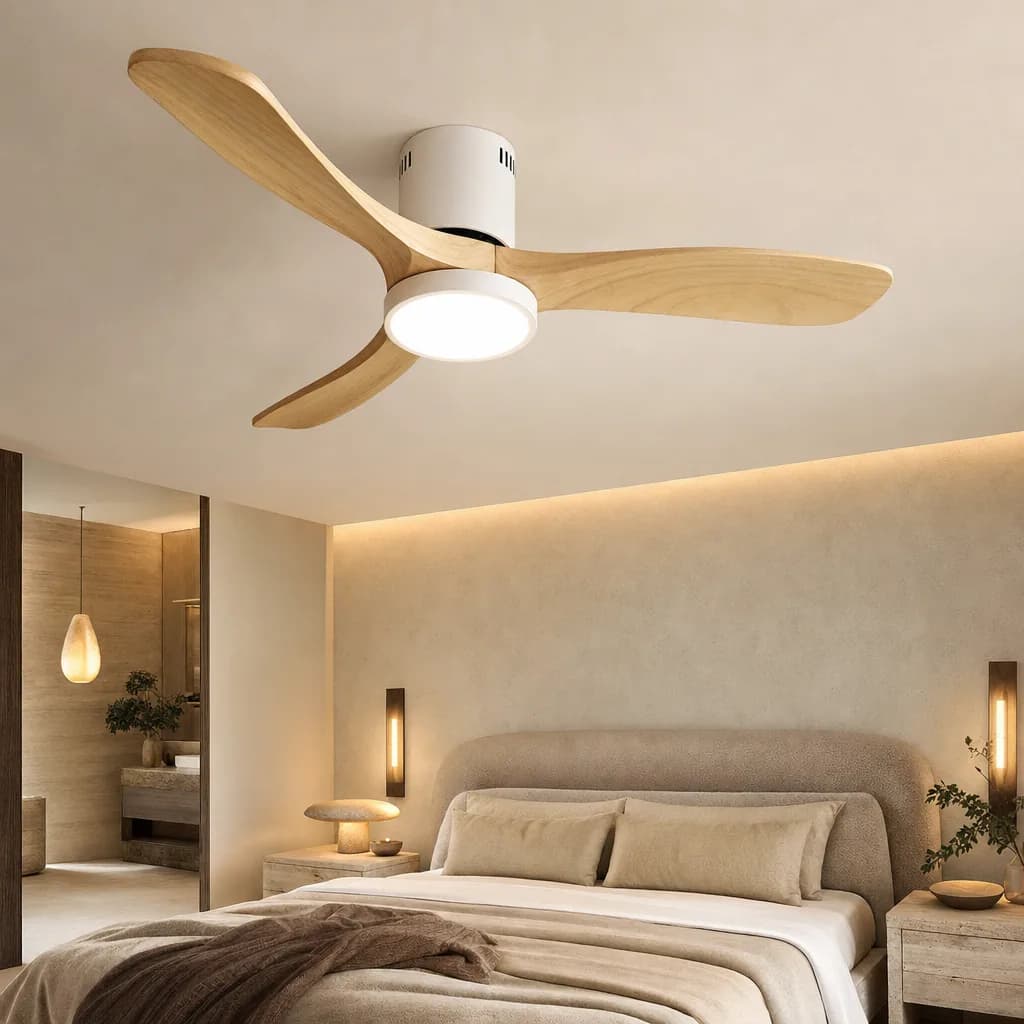
The noblest finishes are natural oils and waxes, which nourish the wood and give a slightly satin matt result. Gloss varnish protects well but seals the material, the wood no longer breathes or ages, and will look false in ten years. Oiled walnut panels, whether a table top, mirror frame or ceiling fan blades, gain value with time: every light scratch becomes a mark of life.
- ·Oak: robustness, clarity, versatility, Nordic and classical
- ·Walnut: depth, warmth, premium, Japandi and contemporary
- ·Ash: lightness, fine grain, accessible price, excellent long-term value
- ·Teak: water resistance, outdoor and bathroom use, silver patina
Brass: brushed, polished, oxidised, the different finishes
Brass is the metal of the moment in premium interiors, for good reason. An alloy of copper and zinc, it exists in a range of finishes suited to very different atmospheres. Polished brass speaks to classical and luxury hotel aesthetics. Brushed (satin) brass is more contemporary and more resistant to fingerprints, the most used finish in high-end kitchens and bathrooms.
Unlacquered brass, 'living brass', is the most precious in Japandi and wabi-sabi aesthetics. With no protective lacquer, it develops a natural patina through contact with air and hands. After a few months it takes on a warm, irregular depth that nothing can imitate. Tap bodies, table legs, handles and lamp frames in unlacquered brass are investments that improve over years.
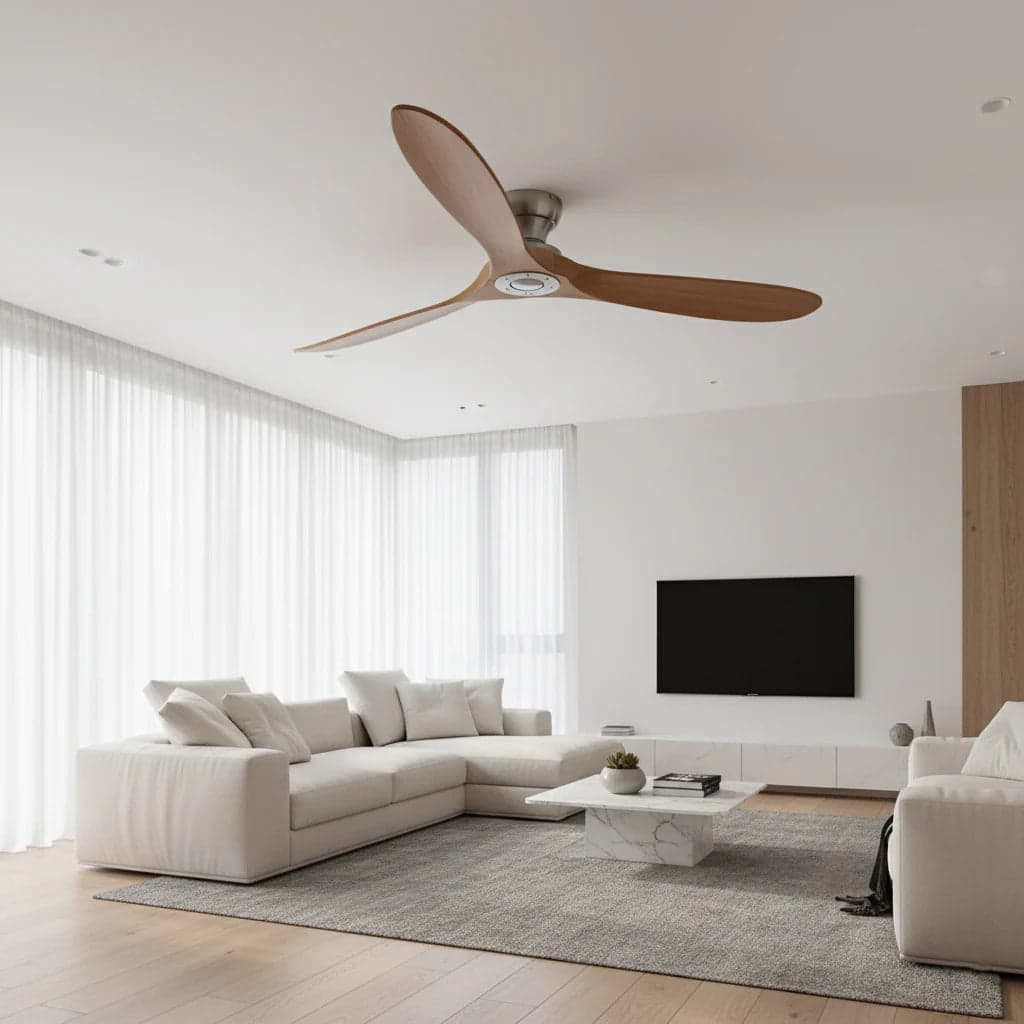
The Massif 132
Natural solid wood & silver · Ø 132 cm
- ✓Silent DC motor, 6 reversible speeds
- ✓Remote control included
- ✓30-minute installation, illustrated manual
€409€519
Travertine and natural stone: identifying and pairing
Travertine is a limestone formed around hot springs, its veins and natural cavities (pores) are the signature of its geological formation. Authentic travertine has an irregularity the eye immediately recognises against ceramic imitation. Colouration ranges from near-white cream to honey beige, with veining from fine to generous.
In interiors, travertine is used for flooring, wall cladding (bathroom, kitchen, fireplace) and furniture (table top, basin, shelf). Its natural warmth makes it compatible with almost every material, wood, linen and metal suit it particularly well.
Linen and natural textiles: care and combination
Linen is the oldest and most durable textile fibre in the world. Grown primarily in Normandy and Belgium, it offers exceptional durability, natural coolness in summer and insulation in winter. Its slightly irregular surface, resistant to the perfection of synthetics, is precisely what sets it apart.
In decoration, linen dresses windows (unlined curtains for filtered light), sofas, beds, and tables. It combines naturally with wood, brass and stone, the trilogy of warm noble materials. Washed regularly, it softens and takes on a sought-after slightly golden tone.
Noble materials are not a luxury for large budgets, they are investments that appreciate over time. A solid oak top, a brushed brass tap, travertine flooring, linen curtains, these choices amortise over decades, while inexpensive decoration is replaced every three years. It is in this spirit that our solid walnut fan blades were conceived: pieces that will still be beautiful in twenty years.
Frequently asked questions
How do you tell solid wood from veneer?+
Look at the edge cut or the underside of the piece. Solid wood shows continuous grain across the full thickness. Veneer shows a thin layer of precious wood over MDF or particleboard. To the touch, solid wood is slightly irregular; veneer is perfectly smooth.
Is unlacquered brass difficult to maintain?+
No, provided you accept its patina. Clean with mild soapy water; no regular treatment is needed. To slow oxidation, a light rub with natural wax every six months suffices. If you prefer consistent shine, choose lacquered brass.
Does travertine withstand bathroom humidity?+
Yes, provided it is correctly sealed. A penetrating sealer applied once a year protects the stone's porosity. In a shower, prefer filled and polished travertine. Avoid acid products (vinegar, lemon juice) that attack limestone.
The SEY Maison Circle
Every month, an exceptional piece. Never reissued.
The Drops principle: one high-end furniture piece per month, in a numbered edition. Once it's gone, it never comes back. Circle members are notified 48 h early, access each drop 24 h before everyone else, and receive our guides before publication.
Discover the Drops →