Energy & ecology
Ceiling fan power consumption: kWh, costs and AC comparison explained
Published on ·3 min read
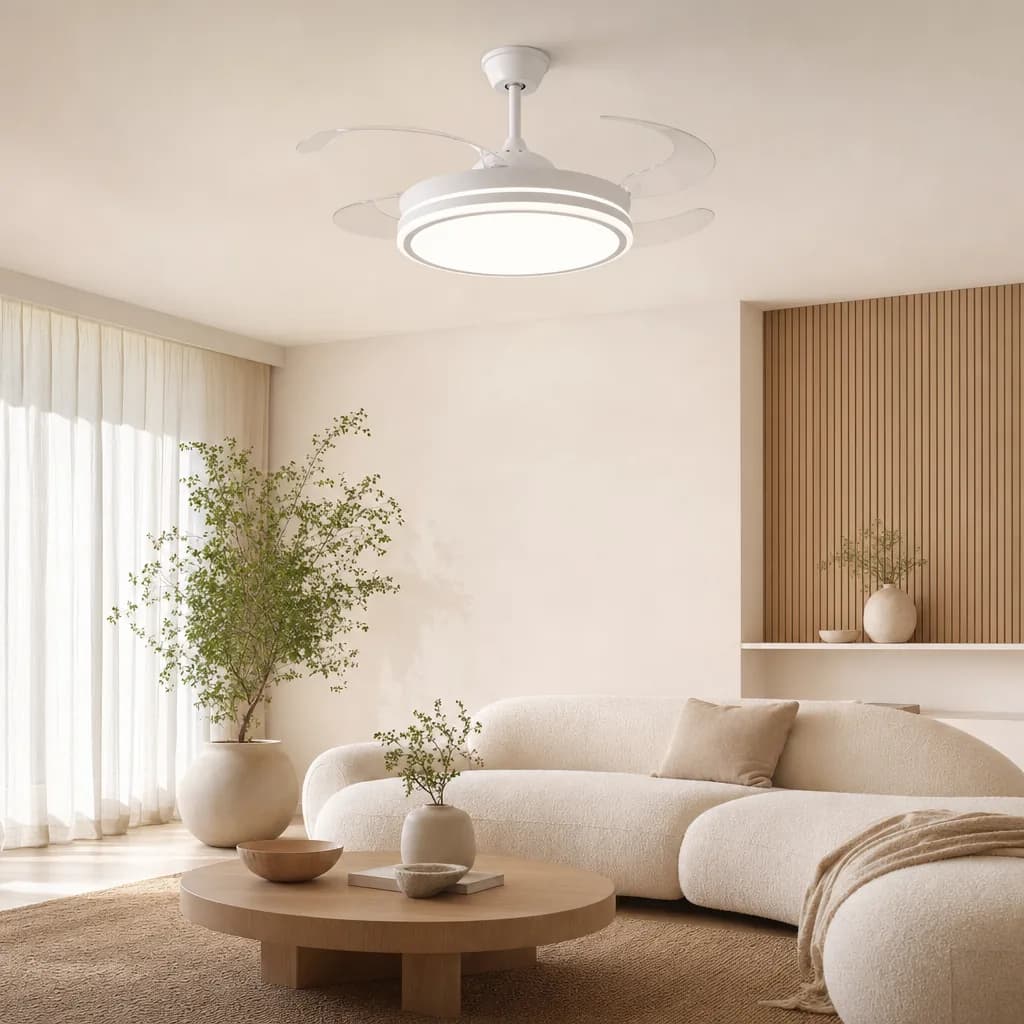
The question returns every summer: does a ceiling fan really use that little electricity? The short answer is yes, but behind that 'so little' lie precise figures worth examining. Between an entry-level AC motor and a premium DC motor, the gap can reach a factor of ten. And against air conditioning, there is simply no comparison.
AC motor vs DC motor: the gap that changes everything
Classic AC ceiling fans consume between 50 and 100 W depending on speed and blade diameter. DC motors draw just 5-30 W for often superior airflow performance. Over a four-month summer at eight hours a day, an AC motor at 75 W accumulates around 72 kWh (€18-20), while a DC motor at 20 W uses only 19 kWh (€5).
The aerodynamic efficiency ratio, m³/h per watt, is the key figure to compare. DC motors consistently sit at the top, reaching 150 m³/h·W and above.
- ·Standard AC motor (75 W, 8 h/day, 4 months): ≈ 72 kWh → €18-20
- ·Premium DC motor (20 W, 8 h/day, 4 months): ≈ 19 kWh → €5
- ·DC motor at night speed (8 W): ≈ €2 per season
Air conditioning vs ceiling fan: the numbers
A standard split AC unit draws 2,000-3,000 W, 2,500 W on average. Eight hours a day for four months: 960 kWh, or €240-265 on the bill, not counting installation (€800-1,500), annual maintenance (€150), or refrigerant recharges.
The DC ceiling fan runs at 20 W under the same schedule: 19 kWh, €5. The ratio is 1 to 50. It does not cool the air, it lowers perceived temperature by 3 to 4°C through wind-chill, but in most well-managed European homes, this gain is enough to get through summer comfortably.
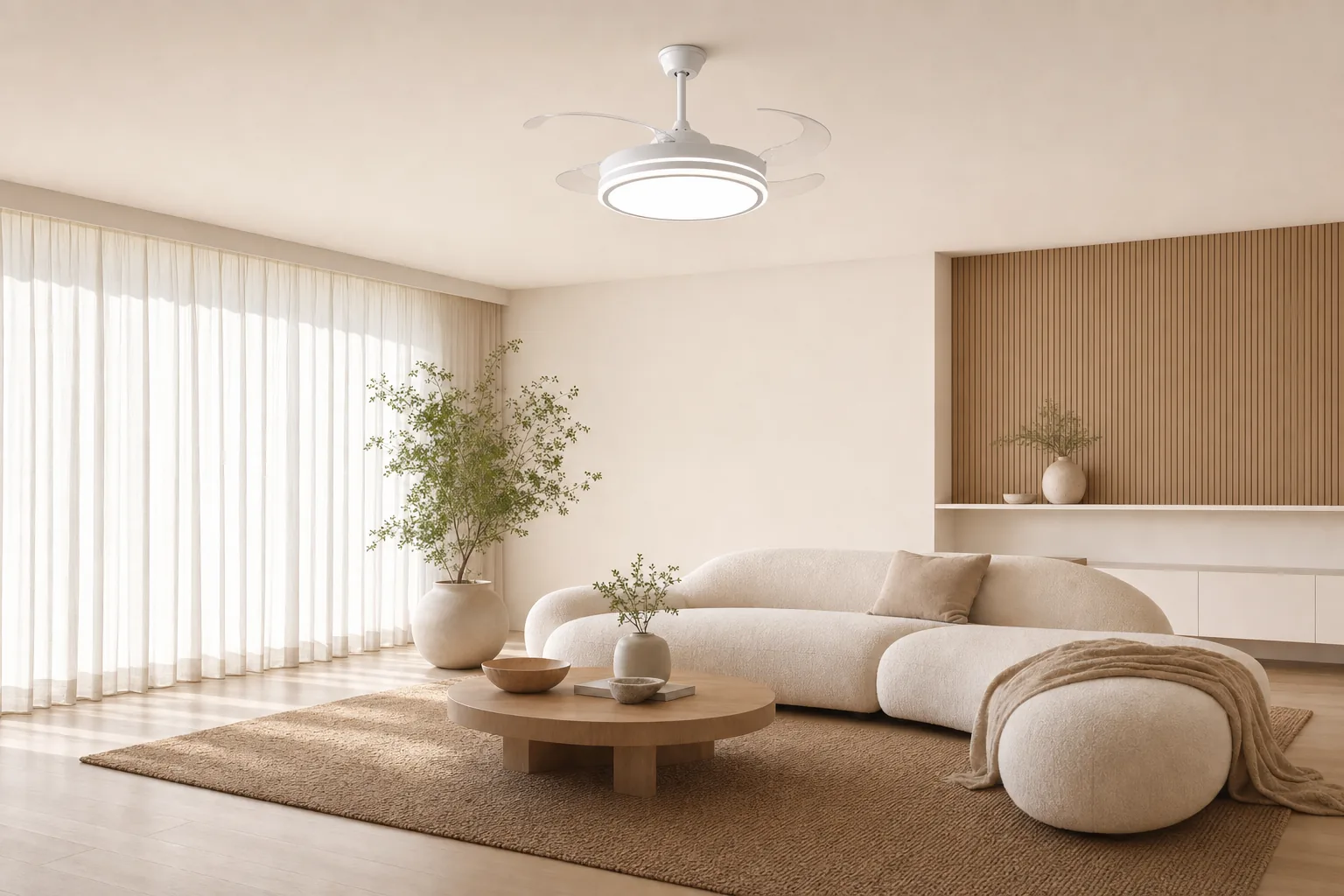
The Boréal 107
Retractable blades · Ø 107 cm · LED ceiling light & silent fan
- ✓Retractable blades: invisible when off, nobody guesses it's a fan
- ✓Sleep with windows closed, 30 dB, quieter than a whisper
- ✓Integrated LED 2700K → 6000K, dimmable: replaces your ceiling light
Choosing the right size for your room
A 107 cm blade span comfortably covers 20 to 30 m². For 30 to 45 m², move up to 132 cm. Beyond that, two fans outperform one oversized unit: homogeneous circulation, lower individual speeds, and less noise.
Ceiling height matters too. Below 2.4 m, a hugging (flush-mount) model is the right choice. Between 2.6 and 3 m, a standard 30 cm rod works well. Above 3 m, a long extension brings the blades into the optimal zone: 2.1 to 2.5 m from the floor.
Ten-year cost of ownership
A quality ceiling fan (€300-700) may seem expensive against a portable AC unit (€150). Over ten years the balance reverses: the fan has near-zero maintenance cost, €5-20 per summer in electricity, and no installation fees. The portable AC costs €150-250 per summer in electricity, degrades window seals, requires regular emptying, and depreciates quickly.
A DC ceiling fan costs around €2 per summer to run, hard to beat for thermal comfort. That quiet efficiency, combined with uncompromising aesthetics, is what guides the design of every SEY Maison model.
Frequently asked questions
What is the average power consumption of a ceiling fan?+
5 to 30 W for a DC model, 50 to 100 W for a classic AC motor. Over a full summer (8 h/day, 4 months), that is 5-19 kWh versus 48-96 kWh, roughly €2-5 versus €12-24.
Does a ceiling fan use more than air conditioning?+
Far less. A split AC draws 2,000-3,000 W versus 5-30 W for a DC fan, a ratio of 1 to 100 in power and roughly 1 to 50 in annual cost.
Can a ceiling fan run all night?+
Yes, it is actually its most effective use. At night speed (8 W or less on premium DC models), the overnight cost is a fraction of a cent. Wind-chill lets you sleep with windows closed at under 30 dB.
The SEY Maison Circle
Every month, an exceptional piece. Never reissued.
The Drops principle: one high-end furniture piece per month, in a numbered edition. Once it's gone, it never comes back. Circle members are notified 48 h early, access each drop 24 h before everyone else, and receive our guides before publication.
Discover the Drops →